Electric Car Running Cost UK 2026: Complete Annual Breakdown
Running an electric car in the UK costs £600-£1,200 per year for the average driver covering 8,000 miles, roughly half the cost of a petrol equivalent at £1,400-£1,800. The biggest variable is your charging strategy: home charging at 5-7p per mile versus public rapid charging at 14-20p per mile. This guide calculates total running costs including electricity, road tax, insurance, servicing, and depreciation.
Electricity Cost: Home vs Public Charging
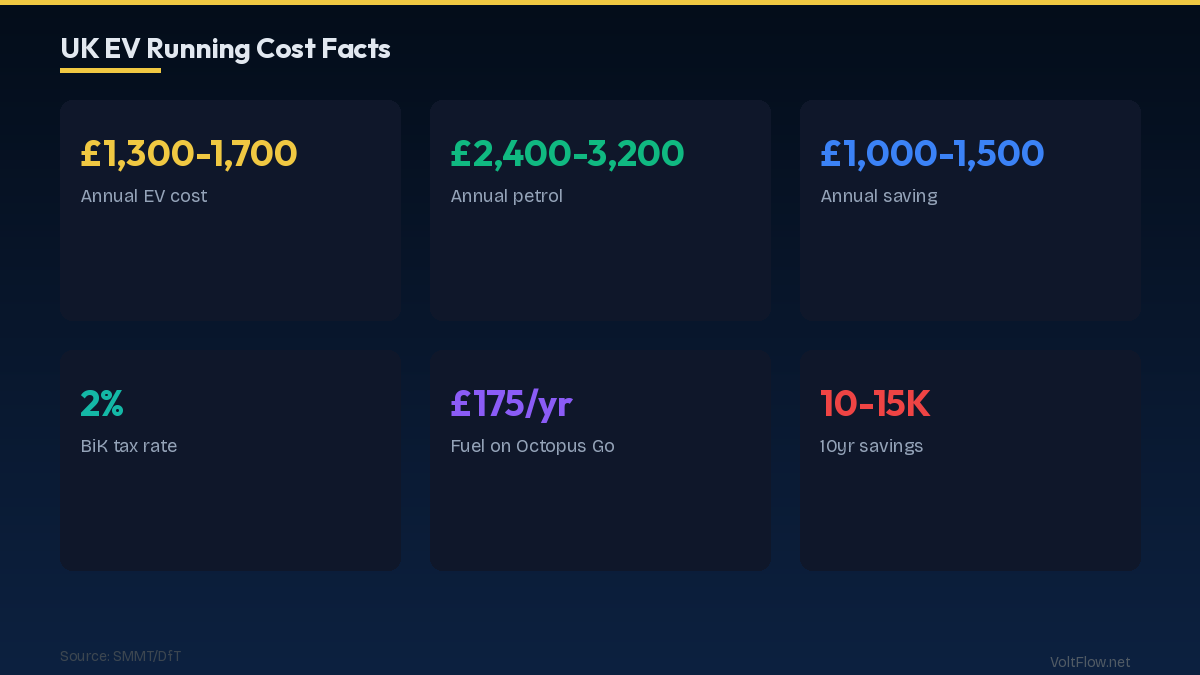
Electricity for charging is the EV equivalent of fuel and represents the single largest variable in running costs. The cost per mile varies by a factor of three or more depending on where and when you charge. Home charging at the standard Ofgem rate of 24.5p per kWh costs approximately 5.5-7p per mile for most EVs. A Tesla Model 3 averaging 4 miles per kWh costs 6.1p per mile. A Volkswagen ID.3 averaging 3.8 miles per kWh costs 6.4p per mile. A Hyundai Ioniq 5 averaging 3.2 miles per kWh costs 7.7p per mile. For 8,000 miles annually, electricity costs range from £440-£616 per year. On an overnight smart tariff like Octopus Go at 8p per kWh, costs drop to 1.8-2.5p per mile, or £144-£200 per year for 8,000 miles. This is remarkably cheap motoring, less than £4 per week. Public slow and fast charging at 40-55p per kWh costs 10-17p per mile. For a driver doing 50% home and 50% public charging, blended cost is approximately 8-12p per mile. Public rapid charging at 60-80p per kWh costs 15-25p per mile, approaching petrol costs for less efficient EVs on expensive rapid chargers. Workplace charging, where available, provides the cheapest possible charging at 0p per mile if the employer provides it free, or 5-8p per mile if charged at a subsidised rate. Free workplace charging for a 20-mile round trip commute saves approximately £400-£500 per year compared to home charging. The charging strategy matrix for 8,000 miles per year shows: 100% home standard rate costs £500-£600, 100% home overnight tariff costs £150-£200, 80% home plus 20% public costs £520-£700, 100% public rapid costs £1,200-£1,600, and 50% free workplace plus 50% home overnight costs £75-£100. The optimal strategy for most drivers is home charging on a smart overnight tariff for daily commuting, with occasional public rapid charging only for long journeys.
Road Tax, Insurance, and MOT Costs
Beyond electricity, several fixed costs contribute to the total annual running cost of an electric car in the UK. Road tax or Vehicle Excise Duty changed for EVs from April 2025. New EVs registered from April 2025 onwards pay the standard rate of £190 per year after a first-year rate based on the vehicle list price. EVs costing over £40,000 also pay the expensive car supplement of £410 per year for years 2-6, bringing total VED to £600 per year during those years. EVs registered before April 2025 are exempt until 2025, then pay £190 or £600 depending on the list price. This represents a significant change from the previous zero-rate policy but EVs still pay less than most petrol and diesel cars whose first-year rate can exceed £2,000 for high-emission models. Insurance for electric cars costs approximately 5-15% more than equivalent petrol models due to higher repair costs from battery and electronic component complexity, fewer specialist EV repair shops pushing demand and prices, and higher vehicle values due to the battery cost component. Average annual EV insurance is £600-£900 versus £500-£750 for a comparable petrol car. Shopping around on comparison sites and considering telematics policies can reduce the premium significantly. MOT costs for EVs are the same £55 as any other vehicle from the third anniversary of registration. However, EVs have fewer components to fail: no exhaust system, no emissions test, simplified braking system with regenerative braking doing most of the work, and no clutch or gearbox in most EVs. The MOT pass rate for EVs is approximately 5% higher than for petrol cars of the same age. Servicing costs for EVs are substantially lower than petrol cars. There is no engine oil to change, no spark plugs, no timing belt, no exhaust system to corrode, and the brake pads last 80,000-120,000 miles thanks to regenerative braking compared to 30,000-50,000 miles on petrol cars. Annual servicing for an EV costs £100-£200 per year versus £200-£400 for a petrol car, depending on the brand and dealer. Tesla servicing is minimal with no scheduled annual service, only replacement of parts as they wear. Tyre costs are slightly higher for EVs because the extra weight of the battery causes faster tyre wear. EV-specific tyres cost 10-20% more than standard car tyres. Budget approximately £150-£250 per year for tyres versus £120-£200 for a comparable petrol car.
Total Annual Running Cost Comparison
Combining all costs provides the complete picture of EV versus petrol running costs for the average UK driver covering 8,000 miles per year. EV total annual running cost with home charging on a standard tariff: electricity £540, road tax £190, insurance £750, servicing £150, tyres £200, MOT £55 (from year 3). Total: £1,885 per year, or £157 per month. With overnight tariff charging, electricity drops to £175, reducing total to £1,520 per year or £127 per month. Petrol car total annual running cost: fuel at 40 MPG and £1.42 per litre equals £1,290, road tax £190-£380 depending on emissions, insurance £620, servicing £300, tyres £180, MOT £55. Total: £2,635-£2,825 per year, or £220-£235 per month. The EV saves £750-£1,305 per year in running costs, equivalent to £63-£109 per month. Over a typical 4-year ownership period, the EV running cost advantage totals £3,000-£5,220. These savings partially offset the higher purchase price of EVs, which carry a premium of £3,000-£8,000 over comparable petrol models at current pricing. Company car drivers see even larger savings due to the dramatically lower Benefit in Kind tax rate for EVs. The BIK rate for EVs is 2% in 2024-25 and 3% in 2025-26, compared to 25-37% for petrol cars depending on CO2 emissions. For a £40,000 company car, the annual BIK tax on an EV at 3% is £240 at the 20% tax rate or £480 at 40%. The same car as a petrol model at 30% BIK costs £2,400 at 20% tax or £4,800 at 40%. The EV saves £1,920-£4,320 per year in tax alone for company car drivers, making EVs overwhelmingly cheaper when the tax advantage is included.
Depreciation: The Biggest Cost of Car Ownership
Depreciation is the largest single cost of owning any car and affects the total cost of ownership calculation significantly. EV depreciation patterns have evolved as the market has matured and now follow more predictable trajectories than the early days of EV adoption. New EVs typically depreciate 15-25% in the first year and 35-50% over three years, broadly comparable to petrol cars. However, depreciation rates vary enormously by model. Tesla Model 3 and Model Y hold their value exceptionally well, depreciating only 30-35% over three years due to strong demand and limited discounting. Conversely, some early EVs with small batteries like the 24 kWh Nissan Leaf depreciate 60-70% over three years due to limited range making them less desirable on the used market. The key factor in EV depreciation is battery health. A used EV with 95% battery health retains significantly more value than one with 80% health, because battery health directly determines the usable range. Maintaining good battery health through sensible charging practices such as avoiding regular fast charging, keeping the state of charge between 20-80% for daily use, and not leaving the car at 100% for extended periods preserves resale value. For the depreciation calculation, a £35,000 new EV depreciating 40% over three years loses £14,000 in value, or £4,667 per year. A comparable £28,000 petrol car depreciating 45% over three years loses £12,600, or £4,200 per year. The EV depreciates £467 more per year in absolute terms, but the higher running cost savings of £750-£1,305 per year more than offset the depreciation difference. On a total cost of ownership basis including purchase price, depreciation, and running costs over three years, EVs and petrol cars are approaching parity in 2026. For company car drivers, the massive BIK tax advantage makes EVs dramatically cheaper in total cost of ownership regardless of depreciation.
Reducing EV Running Costs: Top Tips
Several strategies can reduce your EV running costs below the averages calculated above, some requiring investment and others requiring only behavioral changes. Switch to an overnight charging tariff. This single change reduces your largest variable cost by 60-70%. Octopus Go at 8p per kWh versus the standard 24.5p saves approximately £350-£450 per year for the average EV driver. The switch requires a smart meter (free installation) and takes one week to process. Set it up once and save automatically for years. Maximise regenerative braking to extend brake pad life and improve energy efficiency. Most EVs allow you to adjust regenerative braking strength. Using maximum regeneration and practicing one-pedal driving where you lift off the accelerator to slow down before using the brake pedal improves real-world efficiency by 10-15% in urban driving. This translates to approximately £40-£80 per year in reduced electricity costs. Check tyre pressures monthly. Underinflated tyres increase rolling resistance and energy consumption. Every 0.3 bar (5 PSI) below the recommended pressure reduces range by approximately 2-3% and increases tyre wear. Maintaining correct tyre pressure costs nothing and saves £20-£40 per year in electricity plus extends tyre life by 10-20%. Precondition the cabin while plugged in during winter. Using the car app to heat the cabin to comfortable temperature while the car is still connected to the charger uses grid electricity rather than battery power. This preserves 5-10 miles of range that would otherwise be consumed by cabin heating, saving approximately 3-5% of winter energy costs. Compare insurance annually. EV insurance is still a maturing market with significant price variation between insurers. Some specialist EV insurers like Aviva EV, LV, and Direct Line offer competitive EV-specific policies. Telematics policies that track your driving style often provide the cheapest premiums for careful drivers, saving £100-£300 per year compared to standard policies. Consider solar panels if you own your home. A 4 kWp solar system generating 3,500 kWh per year can power both your home and your EV for 6-8 months of the year when solar production is high. The marginal cost of charging your EV from solar surplus is zero, reducing annual fuel costs to virtually nothing during the sunny months and £75-£150 for grid charging during winter.