EV Charger Installation UK 2026: Cost, Grants & Best Chargers

Installing a home EV charger in the UK costs £800-£1,200 fully installed, with the OZEV grant providing £350 off for eligible tenants and leaseholders. A 7kW smart wallbox charges most EVs from empty to full in 6-10 hours overnight, making morning departures stress-free. All new home chargers must be smart chargers under UK regulations, capable of scheduling and load management. This guide covers charger options, installation process, costs, and the grant eligibility rules.
Best Home EV Chargers in the UK for 2026
The UK home EV charger market in 2026 is mature and competitive, with several excellent options at different price points. All chargers sold for home installation must be smart chargers compliant with the Electric Vehicles (Smart Charge Points) Regulations 2021, meaning they must support scheduled charging, respond to demand signals, and connect to the internet. The Ohme Home Pro at £800-£950 installed is the standout value choice and particularly popular with Octopus Energy customers. It integrates directly with Octopus smart tariffs to automatically charge during the cheapest half-hour periods, potentially saving £300-£600 per year without any manual scheduling. The Ohme charges at up to 7.4 kW on a single-phase supply, adding approximately 30 miles per hour. Its slim design and tethered cable make daily use effortless. The myenergi Zappi at £1,000-£1,200 installed is the best choice for households with solar panels. It can divert surplus solar electricity to the car charger in real time, charging your EV for free when the sun shines. The Zappi offers three modes: Fast charges at maximum speed regardless of solar, Eco blends solar and grid power, and Eco Plus charges only from solar surplus. For homes with a 4kW solar array, the Eco Plus mode can provide 2,000-4,000 miles of free driving per year depending on seasonal sunshine and driving patterns. The Pod Point Solo 3 at £850-£1,000 installed offers clean design and reliable performance with an untethered universal socket that works with any EV cable. Popular with households that have or plan to have multiple EV brands. It integrates with the Pod Point app for scheduling and energy monitoring. The Tesla Wall Connector at £400-£500 for the unit plus £400-£600 installation offers the fastest home charging for Tesla owners at up to 7.4 kW on single phase or 22 kW on three phase. It integrates with the Tesla app and vehicle for smooth scheduling. While it works with non-Tesla vehicles via a Type 2 cable, the full feature set is optimized for Tesla owners. The Wallbox Pulsar Plus at £750-£950 installed offers compact design and good app functionality with a choice of tethered or untethered configurations. Its power sharing feature allows two Pulsar units on a single circuit, ideal for households with two EVs. When selecting a charger, consider whether you want a tethered cable permanently attached for grab-and-go convenience, or an untethered socket for a cleaner look and compatibility with different cables. Tethered chargers with a Type 2 cable work with all modern EVs sold in the UK.
Installation Process: What Happens on the Day
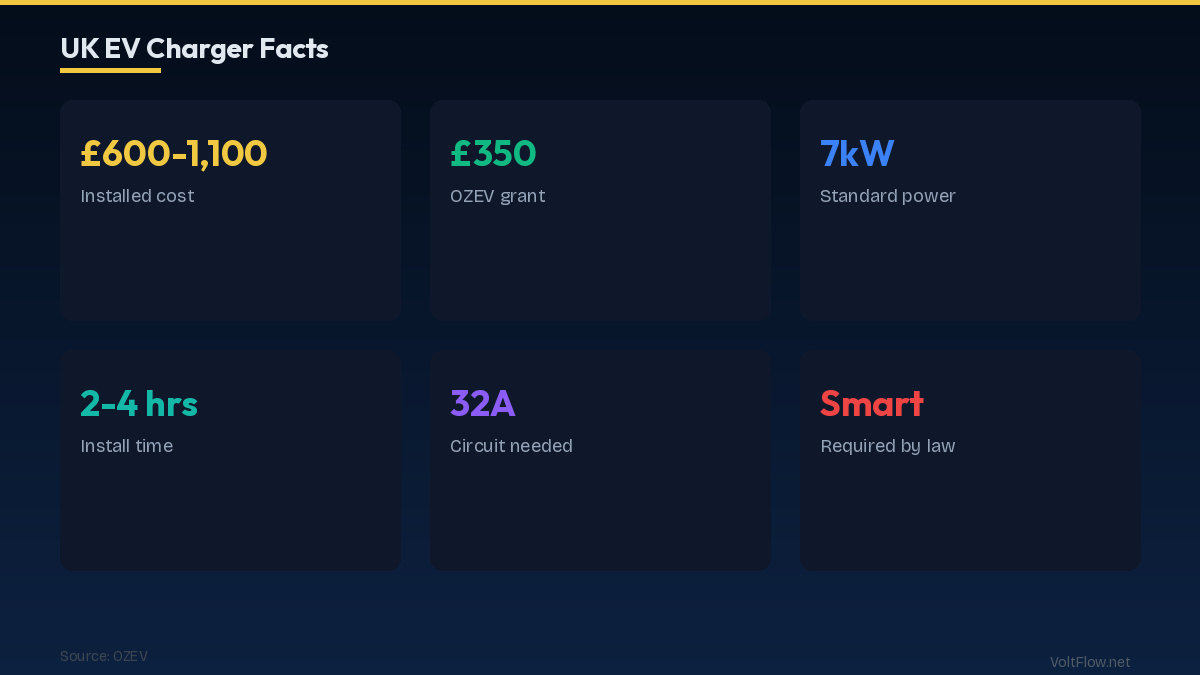
A home EV charger installation in the UK follows a structured process that takes 2-4 hours from start to finish. Understanding each step helps you prepare and ensures the installation goes smoothly. Before installation day, your chosen installer conducts a survey, either in person or via photos you submit through their app or website. The survey assesses your consumer unit for available space and RCD protection, the distance from the consumer unit to the charger mounting location, the cable route through walls and exterior surfaces, the condition of your earthing and bonding, and whether any upgrades are needed before the charger can be installed. On installation day, the electrician arrives with the charger unit and all necessary materials. The first step is isolating the power at the consumer unit. The electrician then installs a dedicated 32A Type A RCD if your consumer unit does not already have suitable protection for the EV circuit. This dedicated RCD is a regulatory requirement for EV chargers in the UK and costs approximately £80-£120 if not already present. Next, the electrician runs a 6mm twin-and-earth cable from the consumer unit to the charger location. For a typical installation where the consumer unit is inside the house and the charger is on the front or side wall of the property, the cable route goes through the interior wall, along the exterior surface in protective trunking or conduit, and into the charger backplate. The cable must be protected from physical damage wherever it is exposed. The charger unit is then mounted on the wall at a height of 0.75-1.2 metres, accessible for plugging in but not obstructing walkways. The electrician connects the cable to the charger terminals, verifies polarity, and tests the circuit with calibrated instruments. Required electrical tests include earth fault loop impedance to verify the circuit will trip the RCD and MCB fast enough to protect against electric shock, insulation resistance to confirm the cable insulation is intact, RCD trip time to verify the RCD disconnects within the required 300 milliseconds, and polarity to confirm correct connection of live, neutral, and earth conductors. After testing, the electrician commissions the charger by connecting it to your home Wi-Fi network and helping you set up the manufacturer app on your phone. They demonstrate the charging process and explain the scheduling features. The installation is certified with an Electrical Installation Certificate conforming to BS 7671. If the installer is OZEV-approved and you are eligible for the grant, they handle the grant application and deduct the £350 from your invoice.
OZEV Grant: Eligibility and How to Claim
The Office for Zero Emission Vehicles grant for home EV charger installation provides up to £350 toward the cost of purchasing and installing a smart charger. The grant has undergone several changes since its introduction, and the 2026 eligibility rules are more restricted than the original scheme. Eligible applicants include tenants renting a property with off-street parking and permission from their landlord, leaseholders in flats with dedicated parking spaces and permission from the building management company, and landlords installing chargers at rental properties for tenant use. Owner-occupiers of houses are no longer eligible for the OZEV grant as of April 2022. If you own your house, you pay the full installation cost without grant support. However, owner-occupiers of flats who are leaseholders remain eligible. To claim the grant, you must use an OZEV-approved installer. The installer applies for the grant on your behalf and deducts the grant amount from your invoice. You do not need to apply separately or claim a refund. The process is smooth from the customer perspective. Your installer handles all paperwork. The charger must be a smart charger listed on the OZEV-approved product list. All major chargers from Ohme, myenergi, Pod Point, Wallbox, and other established brands are on the approved list. The charger must be installed at your primary residence or rental property with confirmed off-street parking. The grant covers one charger per property. Additional vehicles at the same address do not qualify for additional grants. The property must have off-street parking where the charger can be accessed without trailing a cable across a public footpath. Terrace houses and properties without driveways or private parking may not qualify unless alternative arrangements like a dedicated parking bay can be demonstrated. If you are not eligible for the OZEV grant, the full installation cost of £800-£1,200 remains competitive compared to the fuel savings an EV provides. At home charging savings of £600-£1,000 per year compared to petrol, the charger pays for itself within 1-2 years regardless of grant support. Some local councils and energy suppliers offer additional grants or incentives for EV charger installation that may partially replace the OZEV grant for ineligible homeowners. Check your local council website and your energy supplier promotions page for available offers.
Installation Costs Breakdown
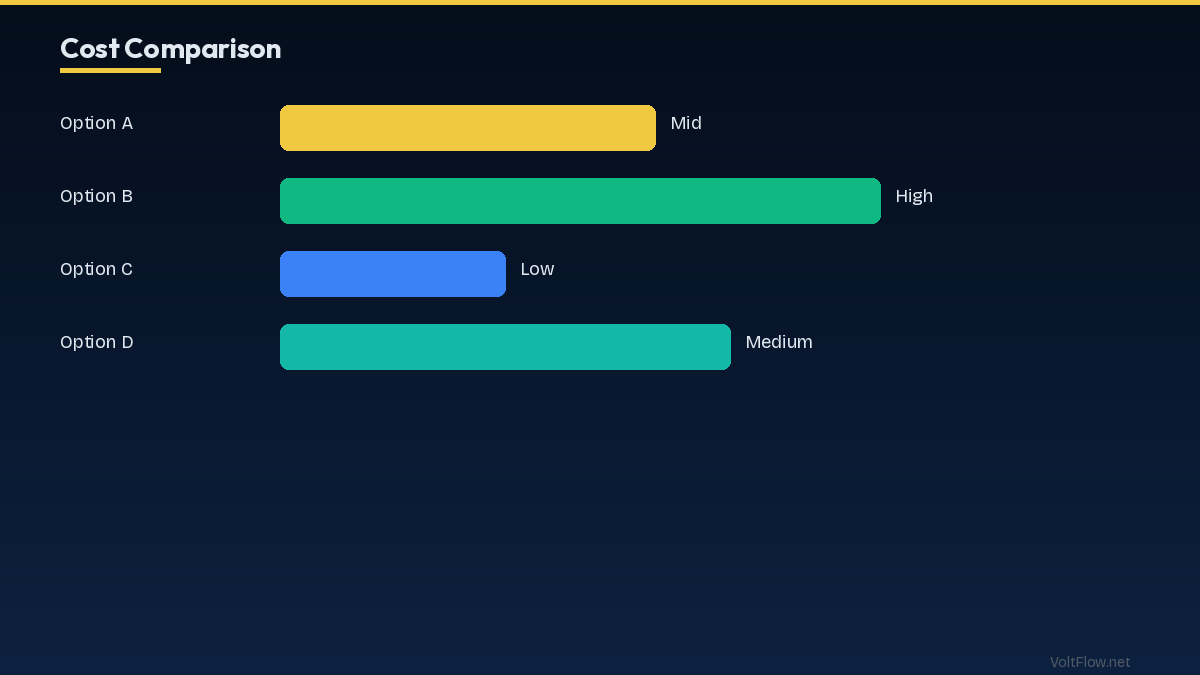
Understanding the individual cost components of an EV charger installation helps you evaluate quotes and identify whether a higher price reflects better equipment, a more complex installation, or simply higher margins. The charger unit itself costs £450-£800 depending on the brand and model. Budget chargers like the Hypervolt at £450-£550 provide basic smart charging functionality. Mid-range chargers like Ohme Home Pro and Pod Point Solo 3 at £550-£700 offer better app integration and tariff optimization. Premium chargers like the myenergi Zappi at £700-£800 add solar integration and advanced energy management. The price difference between models reflects features rather than basic charging capability, all deliver 7kW at the same speed. The dedicated circuit from the consumer unit to the charger costs £150-£400 in materials and labour depending on the cable run distance. A straightforward installation where the consumer unit is on the same wall as the charger location requires only 3-5 metres of 6mm cable, costing approximately £150 in materials and labour. A complex installation requiring a 15-20 metre cable run through the loft, across the house, and down an exterior wall costs £300-£400 for the additional cable, trunking, and labour time. Consumer unit upgrades may be needed if your existing unit lacks space for an additional MCB and RCD, or if the existing earthing and bonding does not meet current BS 7671 requirements. Adding a dedicated Type A RCD for the EV charger costs £80-£120. If the entire consumer unit needs replacing because it is an old rewireable fuse board or a unit without RCD protection, add £300-£500 for a new consumer unit with RCBO protection on all circuits. This is additional to the charger installation cost but may be required for safety regardless of EV charging. Labour costs are typically included in the quoted installation price and represent £200-£400 of the total depending on complexity and duration. A simple 2-hour installation has lower labour content than a 4-hour complex installation requiring loft access, multiple wall penetrations, and extensive trunking runs. Most installers quote a fixed price for the complete installation rather than itemising labour separately, which simplifies comparison between quotes. The OZEV grant of £350 reduces the net cost for eligible customers. After the grant, a typical mid-range installation costs £450-£850 out of pocket. Without the grant, the same installation costs £800-£1,200. Get at least three quotes from OZEV-approved installers to ensure competitive pricing. All quotes should include the survey, charger unit, installation labour, electrical testing, certification, and OZEV grant application if eligible.
Regulations: Part P, BS 7671, and Smart Charger Rules
EV charger installation in the UK is governed by several overlapping regulations that ensure safety and grid compatibility. Understanding these regulations helps you verify that your installer is properly qualified and your installation meets all legal requirements. Part P of the Building Regulations applies to all electrical work in dwellings in England and Wales. Installing a new circuit for an EV charger is notifiable work under Part P, meaning it must be either carried out by an electrician registered with a competent person scheme like NICEIC, NAPIT, ELECSA, or STROMA who can self-certify the work, or notified to local building control before work begins if the electrician is not registered. Using a registered electrician is simpler and cheaper because they issue the certificate directly without building control involvement. Always verify your installer registration before proceeding. BS 7671 (the IET Wiring Regulations, 18th Edition with Amendment 2) sets the technical standards for all electrical installations in the UK including EV chargers. Key BS 7671 requirements for EV charging include a dedicated circuit from the consumer unit on a 32A MCB with 6mm cable minimum for a 7kW charger, Type A RCD protection with 30mA sensitivity which detects DC fault currents that standard Type AC RCDs miss, PME earthing considerations where the installation has a TN-C-S earthing arrangement which requires additional earth rod installation in some cases, and protection against electric shock with disconnection times not exceeding 0.4 seconds for final circuits. The Electric Vehicles Smart Charge Points Regulations 2021 mandate that all new home chargers must be smart chargers capable of preset charging schedules that allow owners to charge during off-peak hours, responding to signals from the grid operator to temporarily reduce or pause charging during peak demand, measuring and recording energy consumption, and connecting to the internet for remote monitoring and updates. These regulations ensure that the growing EV charging load does not overwhelm the electricity grid by enabling coordinated charging during off-peak periods. Non-smart chargers that simply provide power without scheduling capability cannot legally be installed as new domestic EV chargers in the UK. DNO notification may be required depending on your Distribution Network Operator and the charger configuration. Most 7kW single-phase charger installations do not require DNO notification, but some DNOs request notification for all EV charger installations to track grid loading. Your installer should handle any required notifications as part of the installation process. Three-phase installations at 11kW or 22kW always require DNO approval before installation.

Single Phase vs Three Phase: Which Do You Need?
The vast majority of UK homes have a single-phase electricity supply, which limits the maximum EV charger speed to 7.4 kW. Understanding the difference between single and three-phase supplies helps you choose the right charger and set realistic expectations for charging speed. A single-phase supply provides one live conductor at 230 volts with a 100-amp main fuse, delivering a maximum capacity of 23 kW for the entire house. Your EV charger typically draws 7.4 kW or 32 amps from this supply, which is approximately one-third of the total house capacity. While the house can technically support this load alongside normal household electricity use, running the charger simultaneously with other high-draw appliances like the electric shower at 8-10 kW, the oven at 2-3 kW, and the kettle at 3 kW can approach the 100-amp main fuse limit. A well-configured smart charger with CT clamp monitoring adjusts charging speed in real time to avoid overloading your supply, drawing less power when other appliances are active and ramping up when they switch off. At 7.4 kW, a single-phase charger adds approximately 30 miles of range per hour. For a car with a 60 kWh battery, a full charge from empty takes approximately 8 hours, perfect for overnight charging. Most UK EV owners find single-phase 7kW charging more than adequate for daily needs since the average UK car journey is 20-30 miles per day, requiring only 1-2 hours of charging to replenish. A three-phase supply provides three live conductors at 400 volts with a higher total capacity of 60-70 kW. Three-phase is standard in commercial premises and some larger UK homes, particularly newer builds and rural properties. A three-phase supply can support an 11 kW or 22 kW EV charger, reducing charge time to 3-5 hours for a full battery. However, three-phase chargers cost more, the Tesla Wall Connector and myenergi Zappi are available in three-phase versions at a £100-£200 premium over single-phase models. Upgrading a single-phase supply to three-phase is theoretically possible but expensive and rarely justified for domestic EV charging alone. The upgrade requires application to your DNO, installation of a new three-phase meter, and rewiring of the supply cable from the street to your property. Costs range from £1,000-£5,000 depending on the distance from the transformer and the extent of network reinforcement needed. Since 7kW overnight charging meets the needs of virtually all UK EV owners, the upgrade to three-phase is only worthwhile if you have other reasons for higher capacity such as a home workshop, heat pump system, or commercial activity. If your property already has three-phase supply, take advantage of it by installing an 11 kW or 22 kW charger. The faster charging provides a useful buffer for days when you arrive home late and need a rapid top-up before an early departure, or when hosting guests who need to charge their EV during a short visit.