Immersion Heater Running Cost UK 2026: Daily, Monthly & Annual
An immersion heater costs £1.50-£2.70 per day to heat a full tank of hot water at standard UK electricity rates, adding up to £550-£985 per year. This makes it one of the most expensive ways to heat water, costing 3-4 times more than a gas boiler. However, smart controls, timers, and off-peak tariffs can reduce costs by 40-60%. This guide breaks down the exact running costs and shows you how to minimise your hot water bill.
Immersion Heater Running Cost Breakdown
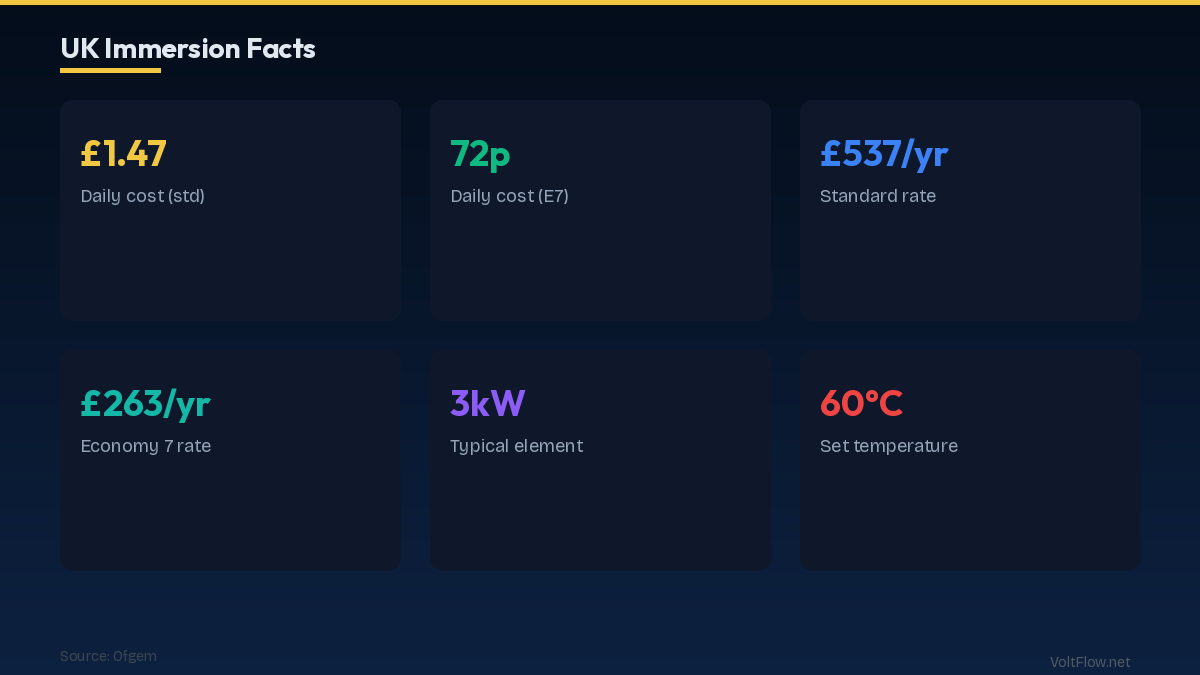
An immersion heater is essentially a large electric kettle element inside your hot water cylinder, typically rated at 3kW for standard domestic models. The cost to heat water depends on the cylinder size, the temperature rise required, the element wattage, and your electricity rate. A standard 120-litre hot water cylinder heated from cold at 15 degrees Celsius to 60 degrees requires approximately 6.3 kWh of electricity using the specific heat capacity formula: mass times temperature rise times 4.186 divided by 3,600,000. At the Ofgem rate of 24.5p per kWh, this costs approximately £1.54 per full heat cycle. A larger 180-litre cylinder requires approximately 9.4 kWh, costing £2.30. A 210-litre family cylinder needs approximately 11 kWh, costing £2.70. Most households heat the cylinder once or twice daily. A family of four using 150-200 litres of hot water per day typically runs the immersion heater for 2-3 hours daily, consuming 6-9 kWh and costing £1.47-£2.21 per day. Over a month, this totals £44-£66, and annually £536-£806. These figures assume heating from cold each time. In practice, a well-insulated cylinder loses only 1-2 degrees per hour when not in use, so reheating requires less energy than a full cold start. A cylinder that cools from 60 to 45 degrees overnight needs only 2.1 kWh to reheat to 60 degrees, costing £0.51 rather than the full £1.54 for a cold start. Cylinder insulation quality dramatically affects running costs. An uninsulated or poorly insulated cylinder loses heat rapidly, forcing the immersion heater to work harder and longer. A factory-insulated modern cylinder with 50mm foam maintains temperature with minimal loss. Adding a £20-£30 cylinder jacket to an older uninsulated cylinder saves approximately £80-£150 per year by reducing standby heat loss. This is one of the cheapest and most effective energy-saving measures for any home with an immersion heater.
Immersion Heater vs Gas Boiler vs Heat Pump Water Heating
Comparing water heating methods reveals the immersion heater as the most expensive option per litre of hot water, but understanding the alternatives helps you evaluate whether upgrading makes financial sense. A gas combi boiler heats water on demand at approximately 6.2p per kWh with 85-90% efficiency. Heating 120 litres costs approximately £0.46, less than one-third the immersion heater cost. Annual hot water cost via gas combi is approximately £170-£250 for a family of four. The gas boiler advantage is overwhelming on running costs, which is why most UK homes with gas supply use the boiler for hot water. A gas system boiler with a hot water cylinder costs slightly more per unit than a combi because of cylinder heat losses, but still costs approximately £200-£300 per year for hot water, roughly half the immersion heater cost. A heat pump water heater like a dedicated hot water heat pump or a domestic air source heat pump heating the cylinder achieves COP 2.5-3.0 for water heating. At 24.5p per kWh electricity but with 2.5x efficiency, the effective cost per kWh of heat is 9.8p, making hot water cost approximately £0.62 per full cylinder heat. Annual cost of £226-£340 is roughly 40-50% of the immersion heater cost while using the same electricity supply. Upgrading from immersion-only water heating to a heat pump water heater saves £300-£500 per year. A dedicated hot water heat pump costs £2,000-£3,500 installed, paying back in 4-8 years. Solar thermal panels provide free hot water during sunny months, typically reducing annual hot water costs by 50-60%. A solar thermal system costs £3,000-£5,000 installed and saves £250-£450 per year on immersion heater costs, paying back in 7-15 years. Solar thermal works well alongside an immersion heater that boosts the temperature on cloudy days. For homes on Economy 7 tariffs, the immersion heater cost picture changes substantially. Heating water overnight at 10-12p per kWh instead of 24.5p reduces the daily cost from £1.54 to £0.63-£0.76 per full cylinder. Annual cost drops to £230-£277, approaching gas boiler levels. This is the scenario where immersion heaters remain economically competitive and explains why Economy 7 was designed around overnight water and space heating.
Timer Controls and Smart Scheduling
The single most effective way to reduce immersion heater running costs is installing a timer that heats water only when you need it, rather than keeping the cylinder hot 24 hours a day. Without a timer, the immersion heater thermostat cycles on and off throughout the day and night to maintain temperature, wasting electricity reheating water that nobody uses. A mechanical timer at £15-£30 fitted to the immersion heater circuit allows you to set one or two heating periods per day. The most efficient schedule heats water for 1-1.5 hours in the early morning before showers and for 1 hour in the evening before washing up. This provides hot water when needed while minimising standby losses during unoccupied hours. Savings compared to a continuously active immersion heater are typically 30-40%, or £160-£320 per year. A digital timer at £25-£50 provides more precise scheduling with multiple daily time slots, different programmes for weekdays and weekends, and holiday mode that disables heating while you are away. The additional precision saves an extra 5-10% compared to a mechanical timer by matching heating schedules more closely to actual usage patterns. Smart immersion controllers like the myenergi Eddi, the iBoost+, and the Mixergy smart cylinder controller offer advanced features. The myenergi Eddi diverts surplus solar electricity to the immersion heater rather than exporting it to the grid at 4-15p per kWh. If your solar panels produce 3 kWh of surplus on a sunny day, the Eddi diverts this to heat water for free instead of earning £0.12-£0.45 in SEG payments, saving £0.74-£0.62 per day by avoiding the 24.5p per kWh import cost for the same heating. The Eddi costs £350-£450 installed and saves £150-£300 per year for solar panel owners. The Mixergy smart cylinder replaces your entire hot water cylinder with one that heats from the top down rather than the entire tank. It connects to your Wi-Fi and learns your usage patterns, heating only the amount of water you need rather than the full tank. If you only need 40 litres for a morning shower, Mixergy heats only the top 40 litres rather than the full 150 litres, using one-quarter of the electricity. Savings of 40-60% compared to heating the full tank make Mixergy the most efficient electric water heating option available.
Immersion Heater Efficiency Tips
Beyond timers and smart controls, several practical measures reduce immersion heater running costs with minimal investment. Set the thermostat to 60 degrees Celsius, not higher. The immersion heater thermostat is adjustable, typically located under a cover plate on the cylinder. Some are set to 65-70 degrees at installation, which wastes electricity heating water hotter than necessary. Water at 60 degrees is hot enough for all domestic purposes and meets the minimum temperature for legionella prevention. Each degree above 60 wastes approximately 2-3% more electricity with no benefit. Reducing from 70 to 60 degrees saves approximately £50-£80 per year. Insulate all hot water pipes from the cylinder to the taps, especially the first 2-3 metres of pipe from the cylinder. Uninsulated pipes lose heat to the surrounding air, cooling the water before it reaches the tap and wasting the energy used to heat it. Pipe insulation foam tubes cost £10-£20 for the entire hot water circuit and reduce heat loss from pipes by approximately 75%. Annual savings of £20-£40 pay back the material cost within one year. Fix dripping hot taps immediately. A hot tap dripping at one drop per second wastes approximately 5,500 litres of hot water per year, costing £15-£25 in wasted electricity. A new tap washer costs £1 and takes 15 minutes to replace. Use the shower rather than the bath whenever possible. A 5-minute shower uses approximately 35-40 litres of hot water while a bath uses 80-100 litres. Switching from a daily bath to a daily shower saves approximately 15,000-20,000 litres of hot water per year, reducing immersion heater costs by £100-£150 annually. Consider a shower timer to keep shower durations under 5 minutes for maximum savings. Install a mixing valve or thermostatic shower valve that blends hot and cold water to the desired temperature rather than relying on the user to manually mix at the tap. Thermostatic valves maintain a constant output temperature of 38-42 degrees, which means less hot water is drawn from the cylinder per shower compared to a manually mixed shower where users often set the temperature too high and compensate with cold water, wasting the excess heat.
When to Replace Your Immersion Heater
Immersion heaters have a lifespan of 5-15 years depending on water hardness, usage frequency, and the quality of the original element. Recognising the signs of a failing immersion heater prevents sudden loss of hot water and allows you to plan the replacement cost. The most common failure mode is element burnout, where the heating element develops a fault and stops working. You notice this as no hot water despite the timer running and the circuit being active. Testing the element with a multimeter shows infinite resistance, confirming it has failed. A replacement immersion heater element costs £20-£40 and an electrician charges £60-£120 for the replacement, totaling £80-£160. Limescale buildup on the element reduces efficiency and eventually causes failure. In hard water areas of southern and eastern England, limescale accumulates on the element at 1-2mm per year, forming an insulating layer that forces the element to run longer to achieve the same temperature. A heavily scaled element uses 10-20% more electricity than a clean one. Annual descaling or replacement every 5-7 years maintains efficiency in hard water areas. A thermostat failure causes either no heating (thermostat stuck open) or continuous heating that overheats the water and wastes electricity (thermostat stuck closed). An overheating cylinder is dangerous because water above 80 degrees can scald and excessive pressure may damage the cylinder. If your hot water is scalding from the taps, turn off the immersion heater circuit immediately and call an electrician. Replacement thermostats cost £15-£25 plus labour. The cylinder itself may need replacement if it develops leaks from corrosion, which typically occurs after 15-25 years. A new hot water cylinder costs £300-£600 for the unit plus £200-£400 for installation. When replacing a cylinder, consider upgrading to a Mixergy smart cylinder or a larger well-insulated cylinder with dual immersion heaters that allow separate heating of the upper and lower sections for more efficient part-tank heating. If your home has no gas supply and relies entirely on immersion heating, the best upgrade path is a dedicated hot water heat pump at £2,000-£3,500, which reduces water heating electricity by 60-70% and pays back in 4-8 years.
Economy 7 and Off-Peak Immersion Heating
Economy 7 tariffs were designed specifically around the concept of heating water overnight with cheap electricity, making them the ideal tariff structure for immersion heater homes. Understanding how to optimise immersion heating on Economy 7 maximises the cost advantage of off-peak electricity. The standard Economy 7 approach uses a timer to run the immersion heater during the 7-hour off-peak window, typically midnight to 7 AM. At off-peak rates of 10-12p per kWh, heating a 120-litre cylinder costs £0.63-£0.76 instead of £1.54 at the standard rate, a saving of 50-60% per heating cycle. Annual hot water cost drops from £536-£806 to £230-£277, saving £306-£529 per year. The key to making Economy 7 work for water heating is having a well-insulated cylinder that maintains temperature throughout the day until the next overnight heating cycle. A modern factory-insulated cylinder loses approximately 1-2 degrees per hour. Water heated to 60 degrees at 7 AM cools to approximately 42-48 degrees by 6 PM, still warm enough for hand washing and washing up. For evening showers, the water may need a short boost from the immersion heater during peak hours, which erodes some of the overnight saving. Minimise peak-time boosting by scheduling showers for the morning when the water is hottest, using a mixer shower that stretches the hot water further, and ensuring the cylinder insulation is in good condition. If you are on Economy 7 specifically for immersion heating and are considering switching to a standard tariff, calculate whether the overnight water heating savings outweigh the higher daytime rate you pay on Economy 7 for all other electricity use. If your household uses more than 40% of total electricity during Economy 7 off-peak hours between water heating and other overnight loads like EV charging, Economy 7 probably saves money overall. If less than 40% is off-peak, a standard tariff may be cheaper despite losing the cheap water heating rate. Newer smart tariffs like Octopus Go offer even cheaper overnight rates of 7-9p per kWh with a lower daytime premium than Economy 7, making them potentially better for immersion heater households who also charge an EV.