Smart Meter UK 2026: Benefits, Problems & Is It Worth It?
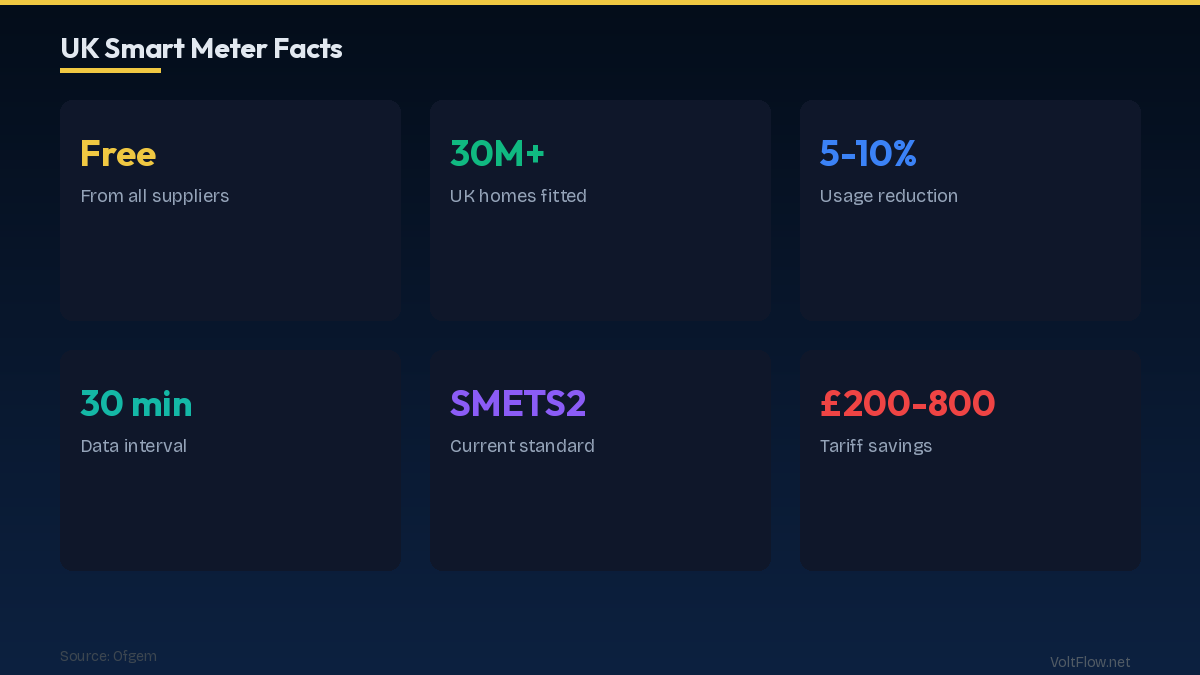
Over 30 million UK homes now have smart meters, and the remaining households are being actively encouraged to upgrade. Smart meters provide real-time energy usage data, eliminate estimated bills, and enable access to cheaper time-of-use tariffs like Octopus Go and Agile. However, concerns about reliability, switching problems, and privacy persist. This guide covers the genuine benefits, real problems, and whether a smart meter is worth getting in 2026.
How Smart Meters Work and What They Show
A smart meter replaces your traditional gas and electricity meters with digital meters that automatically send usage readings to your energy supplier every 30 minutes. The system consists of two components: the meter itself, installed by your supplier engineer in the same location as your existing meter, and the In-Home Display or IHD, a small screen placed in your kitchen or living area that shows real-time energy usage. The electricity smart meter measures consumption in kilowatt-hours and communicates this data through the DCC (Data Communications Company) network using a secure wireless connection. First-generation SMETS1 meters communicated directly with the supplier and sometimes lost smart functionality when customers switched suppliers. Second-generation SMETS2 meters, which are now the standard for all new installations, communicate through the national DCC network and maintain full functionality regardless of which supplier you use. The IHD shows several useful pieces of information. Current usage displays your real-time electricity consumption in watts and the equivalent cost in pence per hour. This allows you to see exactly what each appliance costs to run by watching the display as you turn things on and off. A kettle shows a spike of 3,000 watts costing approximately 12p for a three-minute boil. A TV shows a steady 100-200 watts costing about 3-5p per hour. The IHD also shows daily, weekly, and monthly spending totals that help you track your energy budget. Many households discover that simply having the IHD visible in the kitchen reduces consumption by 5-15 percent through awareness, you think twice about leaving lights on when you can see the cost accumulating in real time. Beyond the IHD, smart meter data is accessible through your supplier app and through third-party energy monitoring services like Loop and Hugo. These services analyse your half-hourly consumption data to provide appliance-level breakdowns, personalised saving recommendations, and comparisons with similar homes in your area. The half-hourly data resolution enables time-of-use tariffs like Octopus Agile and Go, which would be impossible with traditional meters that record only total consumption.
Real Benefits: Savings, Tariffs, and Convenience
Smart meters deliver several tangible benefits that go beyond the simple elimination of estimated bills. Understanding each benefit helps you maximize the value of your smart meter. Accurate billing is the most immediately noticeable benefit. Before smart meters, suppliers estimated your usage for most months and corrected with actual readings once or twice per year. This led to shock bills when the estimate was too low and overpayment when it was too high. Smart meters send actual readings automatically, so every bill reflects exactly what you used. You never overpay or underpay, and there are no surprise correction bills. Access to time-of-use tariffs is the most financially significant benefit. Smart tariffs like Octopus Go, Octopus Agile, Octopus Flux, and similar products from other suppliers require half-hourly consumption data that only smart meters provide. These tariffs offer electricity at 7-12p per kWh during off-peak periods compared to 24.5p on the standard tariff. For EV owners, overnight tariff savings of £300-£600 per year make the smart meter effectively worth hundreds of pounds annually in enabled savings. Without a smart meter, you cannot access these tariffs. Energy awareness from the IHD consistently reduces consumption by 5-15 percent in studies by Ofgem and independent researchers. At average consumption of 2,700 kWh per year, a 10 percent reduction saves 270 kWh or approximately £66 per year. This saving occurs through simple behavioral changes: turning off standby devices, using the tumble dryer less, boiling only the water you need, and being more mindful about heating usage. Easier supplier switching is facilitated by smart meter data. When you compare tariffs on switching sites, your smart meter consumption data can be shared with potential new suppliers to provide accurate quotes based on your actual usage pattern rather than estimated averages. SMETS2 meters maintain full functionality when you switch, eliminating the SMETS1 problem of losing smart features after changing supplier. Export payment for solar panel owners requires a smart meter to accurately measure the electricity you export to the grid. The Smart Export Guarantee or SEG pays 4-15p per kWh for exported solar electricity, and accurate measurement requires a smart meter configured for export recording. Without a smart meter, you either cannot claim SEG payments or must accept estimated export figures that are typically less than your actual export.
Common Smart Meter Problems and Solutions
Despite the benefits, smart meters have experienced several well-publicised problems that cause frustration for some users. Understanding these issues and their solutions helps you make an informed decision and troubleshoot any problems you encounter. SMETS1 meters losing smart functionality when switching suppliers was the most significant early problem. First-generation meters communicated directly with the installing supplier, and when customers switched, the new supplier could not communicate with the meter. The meter reverted to a dumb meter requiring manual readings. The DCC has been enrolling SMETS1 meters into the central network to restore smart functionality, and most SMETS1 meters have now been migrated. If your SMETS1 meter is still not smart after switching, contact your current supplier and ask them to request DCC enrollment. IHD connectivity issues cause the display to lose connection with the meter, showing no data or stale readings. The IHD communicates with the meter via a short-range wireless signal. If the IHD is too far from the meter or there are thick walls between them, the signal drops. Move the IHD closer to the meter or to a location with fewer obstructions. If the IHD consistently loses connection, your supplier can provide a replacement with improved wireless range. Incorrect readings or billing errors occasionally occur when the meter is not properly configured or when the supplier system does not correctly process the smart meter data. If your bill seems wrong, take a manual reading from the meter display and compare it with the reading on your bill. Report any discrepancy to your supplier immediately. They can remotely interrogate the meter to verify the actual reading. Prepayment meter complications arise because smart meters can be remotely switched between credit and prepayment mode. Some customers report being switched to prepayment mode without consent during debt recovery processes. If your smart meter is switched to prepayment mode and you did not agree to this, contact your supplier and Citizens Advice for guidance on your rights. Privacy concerns about half-hourly data collection are addressed by data protection regulations. Your supplier can access your data for billing and network management purposes. They cannot share identifiable consumption data with third parties without your consent. You can choose to share data with energy comparison services and monitoring apps to get personalised savings recommendations, but this is always opt-in.
Smart Meters and Solar Panels: Export Measurement
For the growing number of UK households with solar panels, smart meters play an essential role in measuring both consumption and export, enabling accurate SEG payments and optimized self-consumption. A properly configured smart meter measures electricity flow in both directions. When your solar panels generate more electricity than your home is using, the surplus flows back to the grid. The smart meter records this export separately from your import consumption, providing accurate data for SEG payments. Without a smart meter, export is estimated at 50 percent of total generation, often less than the actual export, particularly for households that are away during sunny daytime hours. The Smart Export Guarantee requires your supplier to offer a tariff for exported electricity. SEG rates vary from 1p to 15p per kWh depending on the supplier and whether the tariff is fixed or variable. Octopus Energy offers competitive export rates including the Flux tariff that pays premium rates during the 4-7 PM peak period. To maximize SEG income, compare export tariffs just as you would compare import tariffs. Half-hourly smart meter data enables intelligent solar-plus-battery management. Home battery systems like Tesla Powerwall and GivEnergy use the smart meter data to determine when to charge from solar surplus, when to discharge to the home, and when to export to the grid for maximum value. Without half-hourly data, these optimizations are less precise and may not capture the full value of time-varying export rates. If you already have solar panels and a traditional meter, installing a smart meter is one of the highest-value upgrades you can make. The combination of accurate export measurement, SEG payment access, and time-of-use tariff eligibility can increase the financial return from your solar system by £100-£300 per year. Contact your supplier to request a smart meter installation, which is free for all UK households. Your solar panels continue generating normally during and after the meter swap, with only a brief interruption of 30-60 minutes during the installation.
Should You Get a Smart Meter in 2026?
The short answer for most UK households is yes, and the case has strengthened since the early rollout days when SMETS1 reliability issues were common. The current SMETS2 meters are reliable, maintain functionality across supplier switches, and enable access to money-saving tariffs that are unavailable without smart metering. The strongest case for getting a smart meter applies to EV owners who can access overnight tariffs saving £300-£600 per year, solar panel owners who can receive accurate SEG payments worth £50-£200 per year, anyone considering a heat pump because smart tariff optimization is essential for heat pump economics, households with high energy consumption above 4,000 kWh per year who benefit most from time-of-use tariff switching, and renters who want accurate billing and the flexibility to switch suppliers easily. The case is weaker but still positive for low-consumption households using under 2,000 kWh per year where absolute savings are smaller, people who rarely switch suppliers and are content with their current flat-rate tariff, and households in areas with poor mobile signal coverage since smart meters use a wireless network that may have coverage gaps in very rural areas. There are no genuine downsides to smart meter installation in 2026. The installation is free. You are not locked into any tariff or supplier. The meter does not control your appliances or limit your consumption. Your data is protected under GDPR. If the IHD does not suit you, you can simply ignore it or turn it off. The installation process takes 45-90 minutes for electricity and gas meter replacement combined. The engineer needs access to both meters and your consumer unit. You experience a brief power interruption of 15-30 minutes during the switchover. After installation, the IHD is paired with the meter and placed in your preferred location. The engineer demonstrates the display features and helps you download the supplier app for mobile access to your data. If you have been putting off getting a smart meter due to early negative publicity, the technology and infrastructure have matured significantly. SMETS2 reliability rates exceed 98 percent, DCC network coverage is complete, and the enabled savings from smart tariffs represent the single largest opportunity for UK households to reduce their energy bills in 2026.
Getting the Most from Your Smart Meter Data
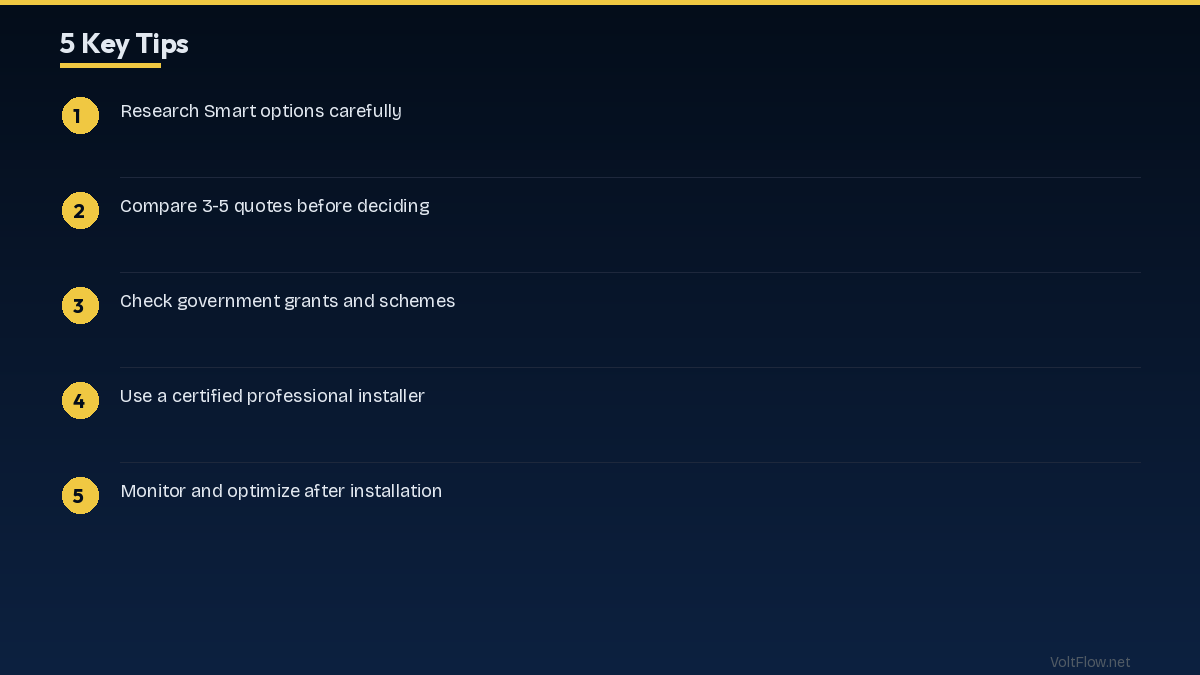
Having a smart meter installed is the first step. Actively using the data to identify savings opportunities and optimize your energy usage turns the meter from a passive billing device into an active money-saving tool. Start with the IHD to identify your baseline consumption. Before changing anything, note your typical daily electricity spending. The average UK household spends approximately £2.40 per day on electricity at current rates. If your daily spending is significantly higher, the IHD will help you identify why by watching the real-time display as appliances cycle on and off throughout the day. The biggest energy vampires in most homes are the immersion heater if left on continuously at 3kW drawing £17.60 per day, old fridge-freezers consuming 2-3 kWh per day costing £0.49-£0.74, tumble dryers using 4-5 kWh per cycle costing £0.98-£1.23, electric showers at 8-10kW consuming significant energy over a 10-minute shower, and standby consumption from entertainment systems, broadband routers, and chargers totaling 0.5-1 kWh per day. Download your supplier app and register your smart meter for online access. Most supplier apps show your consumption in half-hourly, daily, weekly, and monthly views. The half-hourly view reveals your usage pattern throughout the day, showing exactly when your peak consumption occurs and how much the overnight baseline draws when you are asleep. Connect your smart meter data to Loop, a free energy monitoring service that provides more detailed analysis than most supplier apps. Loop identifies specific appliance consumption by analyzing the electrical signatures in your half-hourly data. It shows you which appliances contribute most to your bill and provides actionable recommendations for reducing consumption. If you have solar panels, use the export data to evaluate whether a battery storage system would improve your financial return. Compare your export pattern with import pricing to calculate the value of shifting export to self-consumption. A home battery is worth considering if you export more than 3 kWh per day during periods when your import rate exceeds your export rate by more than 15p per kWh. Review your tariff options quarterly. Energy prices change, new tariff products launch, and your consumption pattern may shift seasonally. Use your actual smart meter data to model the cost of different tariffs including flat rate, Economy 7, Octopus Go, and Octopus Agile. The optimal tariff depends on your specific consumption pattern, and this pattern changes as you add EVs, heat pumps, or solar panels.