Off-Peak Electricity Rates Australia 2026: TOU Rates by State

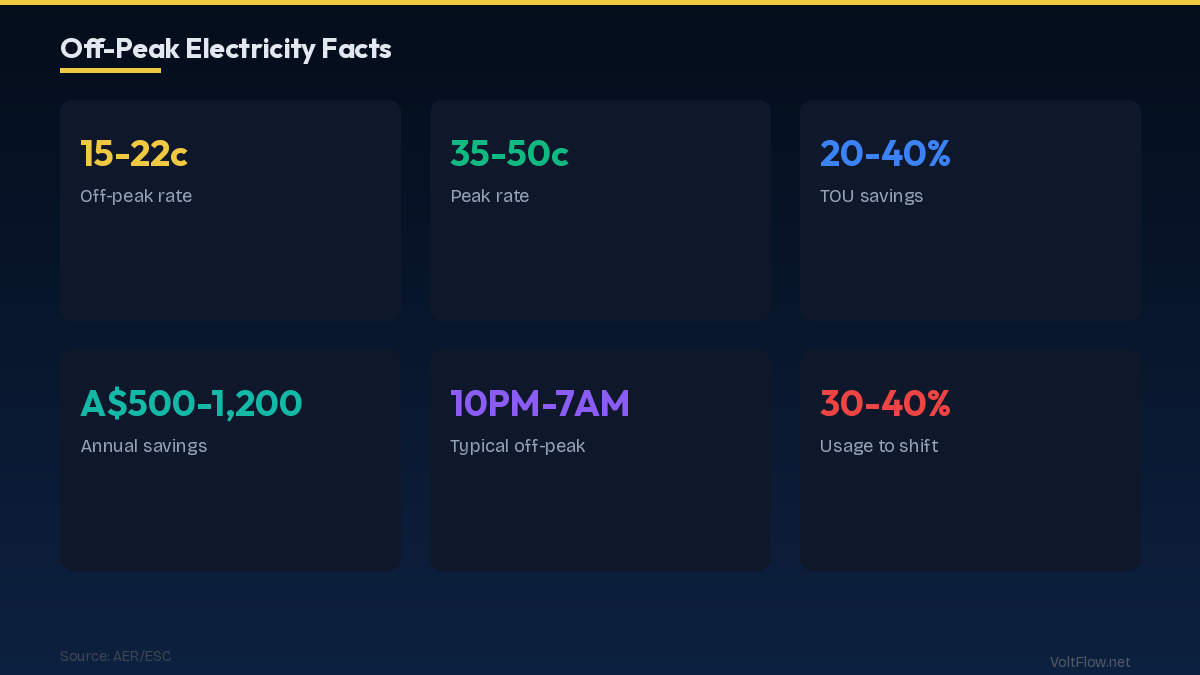
Off-peak electricity in Australia costs 15-22c/kWh compared to 35-50c/kWh during peak hours, a saving of up to 60%. Time-of-use tariffs reward households that shift EV charging, hot water heating, and pool pumps to overnight and midday off-peak windows. This guide maps off-peak rates and hours across every Australian state with strategies to maximise your savings.
Off-Peak Hours and Rates by State
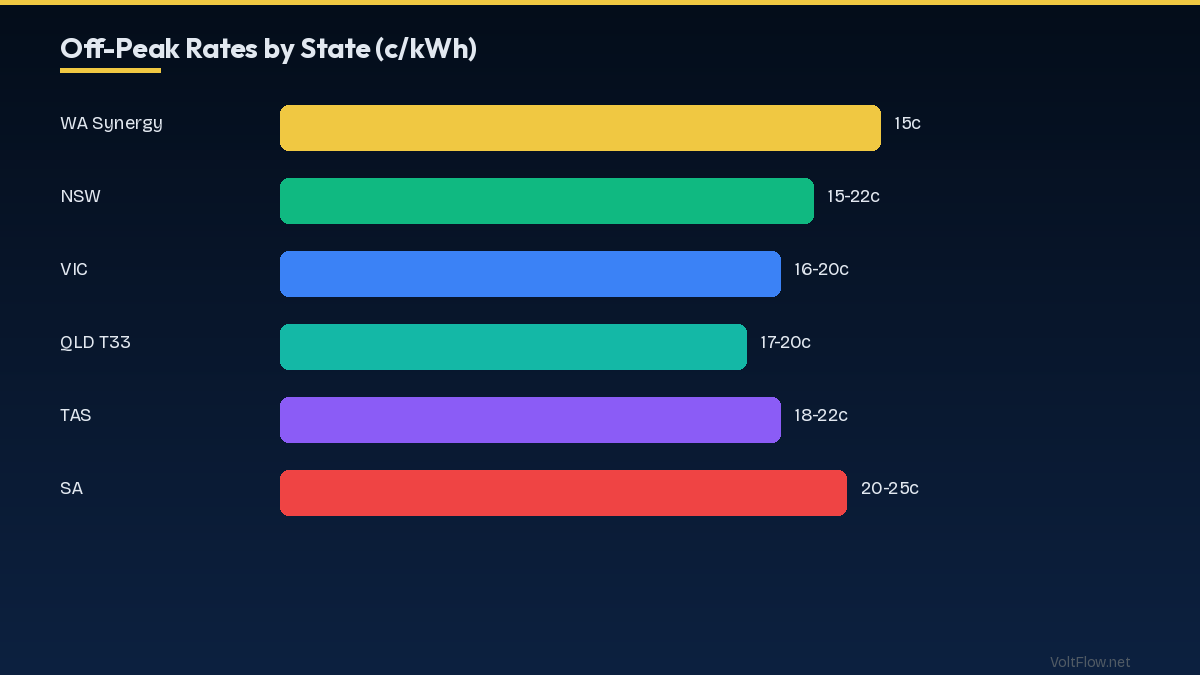
Each Australian state defines off-peak, shoulder, and peak periods differently, and rates vary between retailers. Here are the typical TOU structures in 2026. In New South Wales, peak hours run from 2-8 PM on weekdays at 38-48c per kWh. Shoulder hours cover 7 AM-2 PM and 8-10 PM weekdays at 28-32c. Off-peak covers 10 PM-7 AM weekdays and all weekend at 17-22c. The wide peak-to-off-peak spread of 16-30c makes NSW one of the best states for TOU tariff savings. In Victoria, peak is 3-9 PM weekdays at 35-45c. Shoulder is 7 AM-3 PM and 9 PM-10 PM weekdays at 25-30c. Off-peak is 10 PM-7 AM and weekends at 16-21c. Victoria also offers controlled load tariffs at 12-18c for dedicated circuits like hot water systems that the retailer can schedule. In Queensland, SE QLD peak is 4-8 PM weekdays at 32-42c. Off-peak is 10 PM-7 AM at 15-20c. Shoulder covers remaining hours at 24-28c. Regional QLD on Ergon Energy has different structures with fewer TOU options. In South Australia, peak is 6 AM-10 AM and 3-1 AM weekdays at 42-55c. Off-peak is 1 AM-6 AM at 18-25c. The extreme peak rate makes SA the most rewarding state for load shifting. Moving just 5 kWh per day from peak to off-peak saves A$1.00-$1.50 per day or A$365-$548 per year. In Western Australia, Synergy TOU tariff Midday Saver charges 15c from 9 AM-3 PM (to encourage solar self-consumption and midday grid use), 40c from 3-9 PM, and 28c at other times. This unique structure with a midday off-peak window is designed around Australia high solar generation pattern. In Tasmania, Aurora TOU offers peak at 32-38c from 7-10 AM and 4-9 PM, and off-peak at 18-22c from 10 PM-7 AM and 10 AM-4 PM on weekdays. The midday off-peak window reflects Tasmania hydro-dominated grid where overnight water storage is managed differently than the mainland.
How to Maximise TOU Savings
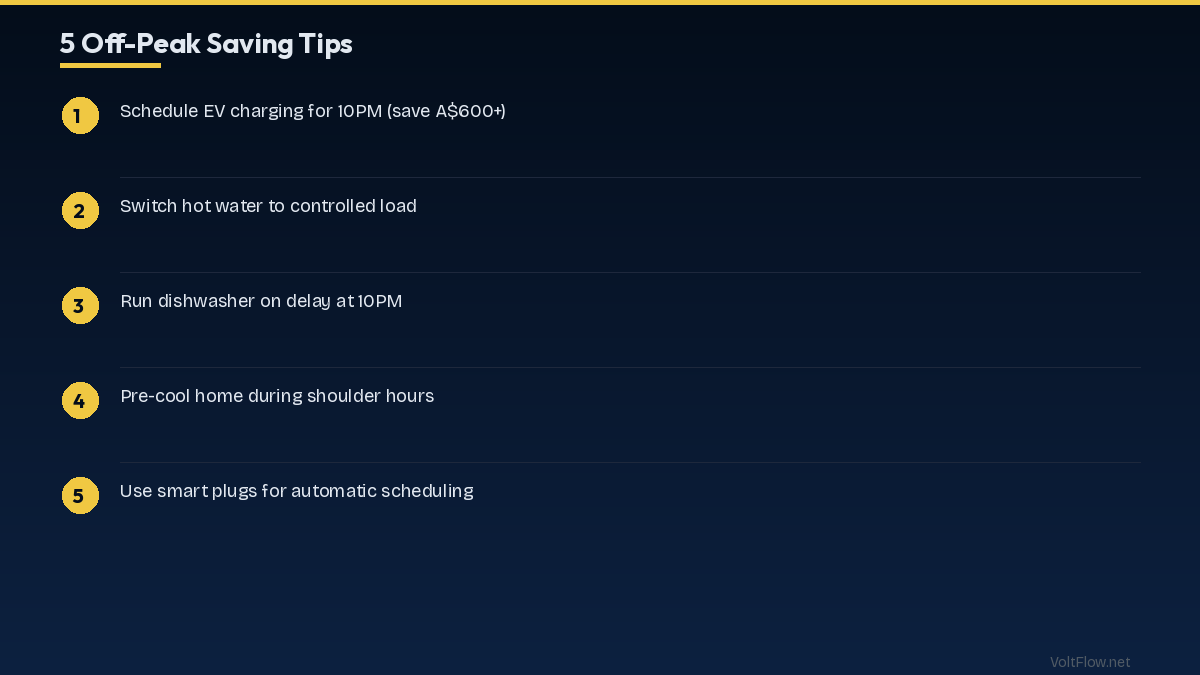
Shifting consumption from peak to off-peak periods requires identifying your largest controllable loads and scheduling them during cheap rate windows. The highest-impact loads to shift are EV charging at 7-10 kWh per session, hot water heating at 3-6 kWh per session, pool pump at 1.5-2.5 kWh per hour for 6-8 hours, clothes dryer at 2-4 kWh per cycle, dishwasher at 1-2 kWh per cycle, and washing machine at 0.5-1 kWh per cycle. EV charging is the single largest shiftable load for most households. Scheduling your EV to charge from 10 PM to 6 AM using the vehicle built-in timer or smart charger scheduling shifts 7-10 kWh daily from peak to off-peak rates. At a peak-to-off-peak spread of 20-30c per kWh, this saves A$1.40-$3.00 per day or A$511-$1,095 per year for daily charging. Every EV and most Level 2 chargers support scheduled charging through their apps. Hot water heating on a timer or controlled load tariff shifts 3-6 kWh to off-peak. Most Australian hot water systems including heat pump, electric element, and some gas boosted solar systems can be placed on a dedicated controlled load circuit that the retailer schedules for off-peak operation. Controlled load tariffs of 12-18c per kWh are even cheaper than standard off-peak rates. Contact your retailer about controlled load options for your hot water system. Pool pumps running 6-8 hours daily consume 9-20 kWh depending on the pump type. Shifting the pump timer to run during off-peak or midday off-peak periods moves this significant load to the cheapest rate window. A variable-speed pool pump combined with off-peak scheduling reduces both the kWh consumed and the cost per kWh, potentially saving A$400-$800 per year compared to a single-speed pump running during peak hours. Smart home automation using devices like smart plugs, smart switches, and whole-home energy management systems can automatically schedule loads based on your TOU tariff. Products from brands like Shelly, TP-Link, and the Fronius energy management platform can trigger appliances during off-peak windows without manual intervention.
Controlled Load Tariffs: The Cheapest Electricity in Australia
Controlled load tariffs provide the lowest electricity rates available in Australia at 12-18c per kWh, but they come with restrictions that limit their use to specific appliances on dedicated circuits. Understanding controlled load helps you access these ultra-cheap rates for suitable loads. A controlled load circuit is a separate electrical circuit from your main switchboard that the distribution network operator can switch on and off according to a pre-set schedule. Typically the circuit is energised during overnight off-peak hours, roughly 10 PM to 7 AM, and sometimes during a midday window. The timing is controlled by a signal from the network, not by you, so you cannot guarantee exactly when the circuit will be active. Controlled load was originally designed for electric hot water systems that heat overnight and maintain temperature through the day. The load can also be applied to pool pumps in some networks, slab heating systems, and other loads that can tolerate a variable operating schedule. EV chargers cannot typically use controlled load circuits because the charging needs to be predictable for departure time planning. To access a controlled load tariff, your electrician installs a separate circuit from your switchboard with a dedicated meter element or smart meter channel. The retailer registers the circuit for the controlled load tariff, and billing shows the controlled load consumption separately at the cheaper rate. Installation cost is A$200-$500 for the dedicated circuit plus any meter configuration fees. The annual saving from running a hot water system on controlled load at 15c versus standard rate at 30c for 2,500 kWh per year is approximately A$375 per year. The installation pays back within 1-2 years and provides ongoing savings for the life of the hot water system. If your home has an electric hot water system on the standard tariff, switching it to controlled load is one of the highest-ROI electrical changes you can make.
Solar and Battery Integration with TOU Tariffs
Combining solar panels and battery storage with a TOU tariff creates a three-way optimisation that maximises the financial return from each component. The solar system generates free electricity during daylight hours. The battery stores surplus solar for evening use and optionally charges from cheap off-peak grid power overnight. The TOU tariff ensures that any remaining grid imports are minimised during peak hours and shifted to the cheapest available rate. The optimal daily cycle on a solar-plus-battery TOU system works as follows. From midnight to 6 AM, the battery charges from the grid at off-peak rates of 15-20c if it was not fully charged by solar the previous day. From 6 AM to 9 AM, the battery discharges to power morning household loads during shoulder or peak rates, avoiding grid imports at 28-45c. From 9 AM to 3 PM, solar panels power the household directly and charge the battery with surplus. Any excess beyond battery capacity is exported at the FiT rate. From 3 PM to 9 PM (peak period), the battery discharges to power the household, avoiding peak grid imports at 35-50c. The value per daily cycle of this optimisation for a 10 kWh battery on a SA TOU tariff is approximately A$2.50-$4.00 per day during seasons when solar production is sufficient to fill the battery. On days when solar is insufficient such as overcast winter days, the overnight grid charge at 18c provides electricity that displaces 42-50c peak imports, still capturing A$2.40-$3.20 in value per cycle from tariff arbitrage alone. Annual value from combined solar shifting and tariff arbitrage for a well-configured system in SA reaches A$1,300-$1,800 per year. In NSW the figure is A$900-$1,300. In VIC A$800-$1,200. These figures assume daily cycling, which modern battery management systems achieve automatically once properly configured by your installer. The key takeaway is that a battery provides value from two independent mechanisms: solar shifting and tariff arbitrage. Even on cloudy days when solar production is minimal, the tariff arbitrage alone justifies the battery operating cost. This dual-value proposition is what makes Australian battery economics increasingly attractive as TOU rate differentials widen.
Is a TOU Tariff Right for Your Household?
Switching to a TOU tariff can save A$200-$1,000 per year for households that shift consumption effectively, but it can cost more than a flat rate for households with heavy peak-period usage they cannot shift. Determining which tariff saves you money requires analysing your actual consumption pattern. Households that benefit most from TOU tariffs include EV owners who charge overnight, solar panel owners who consume or store most daytime generation, households with pool pumps on timers, families where adults work outside the home during peak hours, and households with battery storage or hot water on controlled load. These households naturally have low peak consumption because their largest loads either operate during off-peak hours or are covered by solar generation during the day. Households that may pay more on TOU tariffs include work-from-home households running computers, air conditioning, and kitchen appliances during peak hours, families with multiple children at home in the afternoon, households that cook electrically during the 4-8 PM peak window, and households without solar panels relying entirely on grid power during all hours. To determine your best tariff, request a bill comparison from your retailer using your smart meter data. Most retailers can model your actual half-hourly consumption against both flat and TOU tariffs and show the projected annual cost under each option. If the TOU tariff saves money, switch immediately as the process is free and takes 1-2 billing cycles. If TOU costs more, stay on the flat rate but consider what changes like a pool pump timer, EV charger schedule, or hot water controlled load circuit would shift enough consumption to make TOU viable. Often, one or two simple changes costing under A$500 are enough to tip the balance in favour of TOU and save A$300-$800 per year ongoing. The investment in a smart timer or controlled load circuit pays for itself within months through the tariff savings it enables.
Future of Australian Electricity Pricing
Australian electricity pricing is evolving rapidly toward more granular time-based structures that reward flexible consumption and penalise inflexible peak demand. Understanding these trends helps you make investment decisions that will remain financially sound through the 2030s. Two-way pricing that charges for both consumption and export is being discussed by regulators as rooftop solar penetration creates midday grid management challenges. Under a two-way tariff, you would pay for grid exports during periods of oversupply, effectively penalising systems that dump power onto an already saturated grid. Batteries and self-consumption would become even more valuable under this model by avoiding export charges while capturing high-value evening consumption. Demand tariffs based on your peak instantaneous consumption rather than total consumption are expanding from commercial to residential customers. Under a demand tariff, your bill includes a charge based on the highest 30-minute power draw during the billing period. A single evening where you run the oven, dryer, and EV charger simultaneously could set a high demand peak that adds A$50-$100 to your monthly bill. Batteries prevent demand peaks by supplementing grid power during high-draw periods. Dynamic wholesale pricing through retailers like Amber Electric exposes consumers directly to the wholesale spot market. Negative prices during midday solar surplus reward battery charging. Extreme price spikes during evening peaks reward battery discharge and export. The volatility creates both opportunity and risk, favouring tech-savvy consumers with batteries and automation who can respond to price signals. Five-minute settlement adopted by the NEM enables more granular pricing that rewards fast-responding batteries and penalises slow-responding consumption. This benefits home battery owners enrolled in VPP programmes because their batteries can respond to five-minute price signals and earn premium payments for fast response. The overall trend favours homeowners who invest in solar panels, battery storage, and smart energy management. These investments provide increasing value as pricing becomes more granular and time-sensitive. A solar-plus-battery system installed today will become more valuable over its 10-15 year life as the pricing structures evolve to reward the flexibility it provides.